
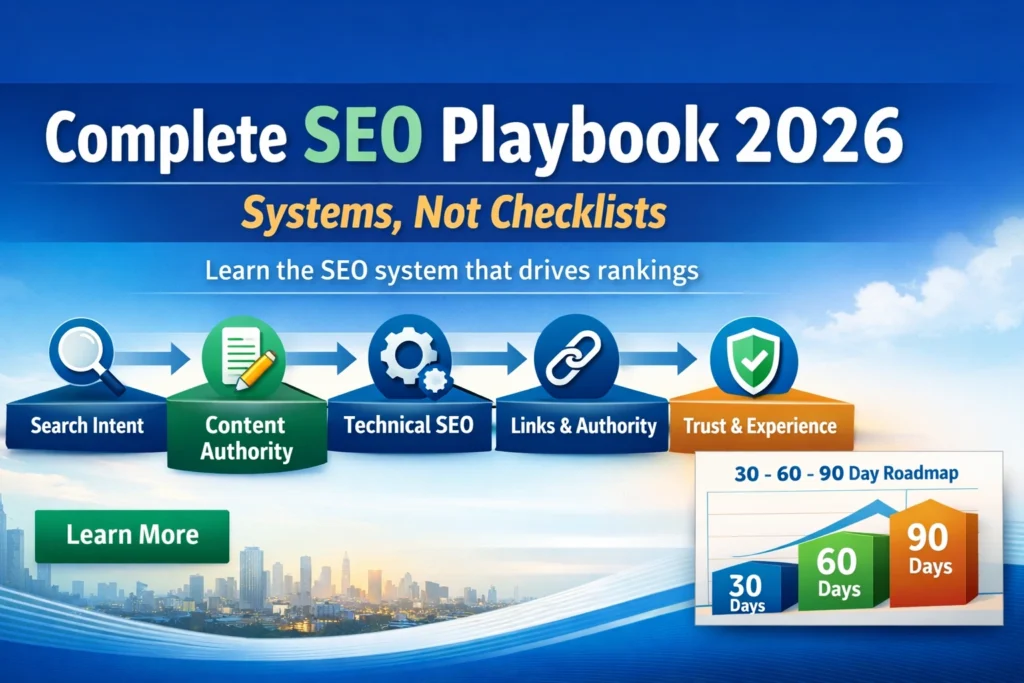
Introduction: Why Rankings Come from Systems, Not Checklists
SEO in 2026 has evolved dramatically. Gone are the days when SEO was just about ticking off a checklist, publish content, add keywords, build links. Modern search engines reward websites that operate on an aligned SEO system rather than isolated tasks. The websites ranking in 2026 have learned that rankings come from aligning intent, content, technical structure, links, and trust as a cohesive system. This playbook will explain the system and guide beginners and small business owners through the implementation process without getting bogged down in tools or tactics.
SEO System Framework: A Systemic Approach to Rankings
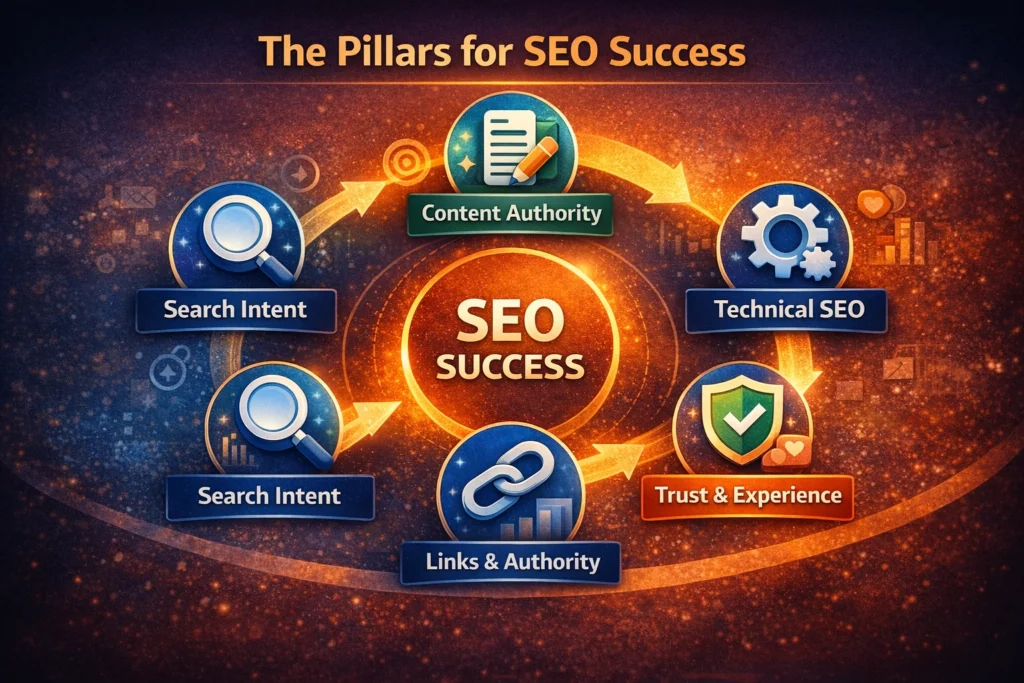
SEO is no longer a task-driven process. It’s a decision framework. Here’s how the system works and why it’s more effective than a checklist:
- Search Intent Alignment
- Content Authority
- Technical Foundations
- Link & Authority Signals
- Trust & Experience Signals
When these five pillars work together, they enable search engines to understand the following:
- What your site is about
- Who it helps
- Whether it’s a reliable resource
Google’s own documentation underscores the importance of aligning content with user intent and trust signals, which makes the system-led approach indispensable in 2026 SEO strategies.
The Five Pillars of SEO Systems
Pillar 1: Search Intent Alignment
SEO begins with understanding user intent. Search engines don’t simply rank pages with the best keywords; they rank the pages that most closely align with the searcher’s intent. The four types of search intent include:
- Informational: The searcher is looking for information.
- Navigational: The searcher is trying to reach a specific site.
- Commercial Investigation: The searcher is researching options.
- Transactional: The searcher intends to make a purchase or take action.
Mapping search intent to content is critical. A common mistake is creating content that doesn’t match the underlying intent. Aligning the right page type with the user’s intent helps search engines understand your page’s purpose, improving rankings.
Pillar 2: Content Authority
Content remains the heart of SEO, but it’s not just about volume; it’s about building authority through structured topical coverage. Modern SEO requires creating topic clusters around pillar topics, supported by detailed guides, case studies, FAQs, and deeper technical content. This system helps search engines identify your expertise and improves the chance of ranking for a broader set of keywords.
For example, a comprehensive guide to SEO workflows would naturally lead to supporting content such as SEO case studies and advanced strategies. If you want expert guidance on building your authority and creating impactful content, Looking for top SEO expert and best trainer in Karachi? can help you take your content strategies to the next level.
Pillar 3: Technical Foundations
Even the best content won’t rank if search engines can’t crawl or understand it. Technical SEO focuses on ensuring your website is easily accessible and understandable to search engines. Core technical aspects include:
- Clean site architecture
- Fast loading pages
- Mobile optimization
- Structured internal linking
- Crawlable page structures
Google emphasizes these technical elements in its Search Central documentation, highlighting their importance for efficient crawling and indexing.
Pillar 4: Link and Authority Signals
Backlinks continue to play a role in SEO but are more effective when they come from authoritative, relevant sources. It’s less about quantity and more about the context and quality of the link. High-value links tend to come from:
- Expert articles
- Research reports
- Educational resources
Instead of chasing links, system-driven SEO asks:
What content would naturally earn references?
For example, if a website publishes a complete guide on SEO workflows or real-world strategies, it becomes a resource others may cite.
Professionals who teach SEO strategy often develop these types of resources. If you are building your knowledge in this area, you may find insights from a top SEO expert and trainer in Karachi who regularly publishes structured learning guides.
Authority grows when content provides genuine value.
Pillar 5: Trust & Experience Signals
Modern search engines place increasing emphasis on credibility and trustworthiness, encapsulated in E-E-A-T (Experience, Expertise, Authoritativeness, Trustworthiness). Trust signals can include:
- Author expertise
- Clear and transparent business information
- Consistent branding and presence
- Positive user feedback and reviews
Trust signals help reinforce your website’s authority and encourage stronger user engagement, both of which are critical for rankings in 2026.
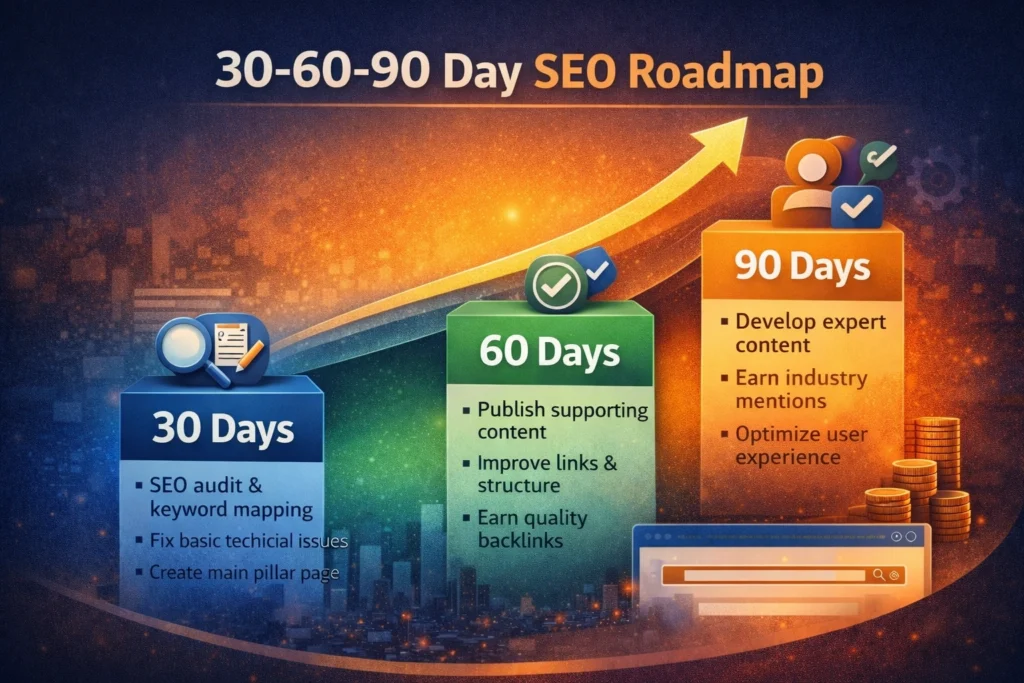
30-60-90 Day SEO Implementation Roadmap
First 30 Days: Build Foundations
The first month is about understanding your market and getting the basics right.
Key actions include:
- Identifying core search topics
- Mapping search intent to page types
- Fixing basic technical issues (e.g., site speed, mobile optimization)
- Creating a pillar page for a main topic
Next 30-60 Days: Expand Authority
In this phase, focus on growing your content authority.
Key actions include:
- Publishing supporting articles
- Strengthening internal linking
- Improving page structure and headings
- Earning references through useful guides
Last 60-90 Days: Strengthen Signals
Once your foundation is set, concentrate on building trust and authority.
Key actions include:
- Developing expert-level guides
- Publishing case studies
- Securing industry partnerships
- Improving user experience on key pages
By aligning intent → content → technical → authority → trust, your SEO system will start functioning efficiently.
Why the “SEO Checklist” Mindset Fails
Traditional SEO guides still focus on isolated tasks like:
- Submit a sitemap
- Add keywords
- Get backlinks
While these actions matter, SEO success comes from aligning the elements in your system. For instance, intent defines content; content requires technical structure; strong content earns links; links build authority; and authority strengthens trust. When these components work together, rankings become sustainable.
FAQs
Q: Is SEO still relevant in 2026?
Yes, SEO remains vital as search engines continue to be the primary way users discover content. What has evolved is the prioritization of aligned systems of content, rather than isolated tactics.
Q: How long does SEO take to show results?
SEO systems typically start showing results within 3–6 months, depending on the competition and your website’s authority. Websites focusing on consistent systems tend to experience faster growth.
Q: What’s the most important SEO factor?
There is no single ranking factor. The strongest results come from alignment across all five pillars: intent, content, technical, authority, and trust.
Q: Can small businesses succeed in SEO?
Absolutely. Small businesses can thrive by focusing on niche topics and building deep expertise, often yielding better results than targeting broad, competitive areas.
Conclusion: Building Your SEO System for 2026
SEO in 2026 is not about quick tricks or hacks. It’s about building a system in which search intent, content, technical structure, authority signals, and trust reinforce one another. Once this system is in place, growth becomes more predictable and sustainable.
Ready to optimize your website using this system Hire Shahzeena Khan today to discuss your SEO strategy.
