
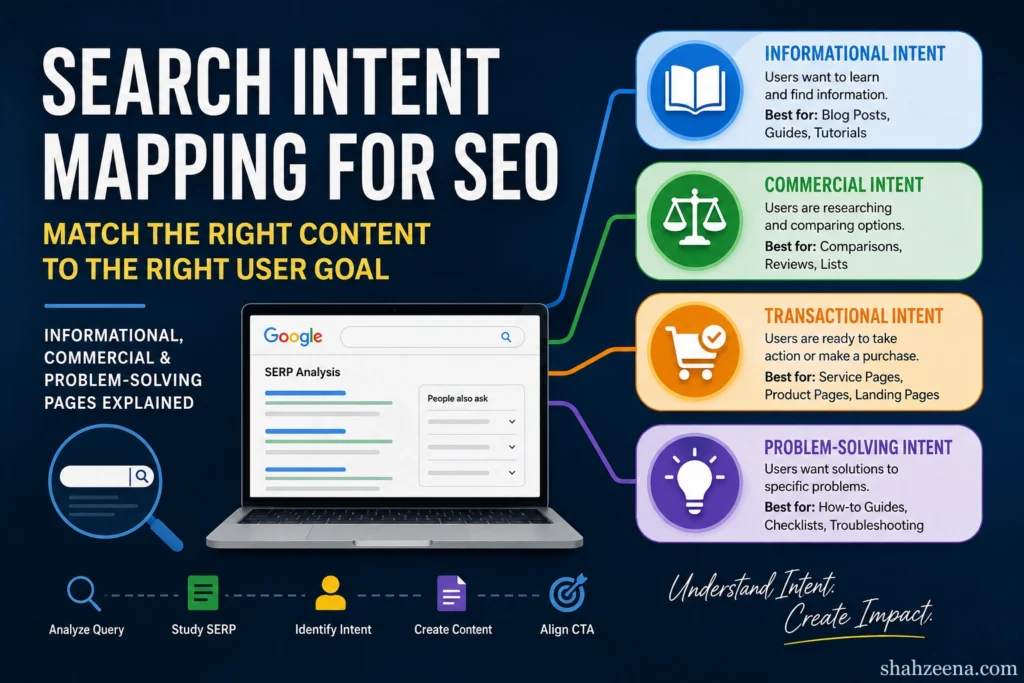
Modern SEO is no longer about inserting keywords into pages and hoping they rank.
Search engines now evaluate whether content actually satisfies the reason behind a search. This is where search intent mapping becomes essential.
A page may contain the correct keywords, but if it does not solve the user’s actual goal, it often struggles to rank consistently.
Understanding search intent helps businesses:
- Create More Useful Content
- Improve Organic Visibility
- Reduce Bounce Rates
- Align Ctas With The User Journey
- Build Stronger Topical Authority
Instead of focusing only on phrases, SEO teams now focus on why people search in the first place.
Why Search Intent Matters More Than Keywords Alone
Years ago, SEO strategies mainly relied on exact-match keywords.
For example:
- “Best Seo Tools”
- “Seo Tools Best”
- “Tools For Seo”
These variations were often treated as separate keyword opportunities.
Today, search engines analyze:
- Semantic Relationships
- Contextual Meaning
- Entities
- User Behavior Signals
- Topical Relevance
- Content Usefulness
This means two keywords with similar wording may require completely different content formats depending on the intent behind the query.
A user searching:
- “What Is Technical Seo” Likely Wants Education
- “Best Technical Seo Agency” Likely Wants Comparison Or Hiring Guidance
- “Technical Seo Audit Checklist Pdf” Likely Wants A Downloadable Resource
The wording may overlap, but the user goals are different.
That is why intent mapping is now a core part of SEO content strategy.
What Is Search Intent in SEO?
Search intent refers to the purpose behind a user’s query.
It explains what someone hopes to achieve after typing a search into Google.
Search engines attempt to match results with the most likely user expectation. This is why SERPs change depending on the intent category.
How Google Interprets User Intent
Google analyzes many signals to understand intent, including:
- Search Phrasing
- Modifiers
- Historical Behavior
- Content Engagement
- Entity Relationships
- Serp Interaction Patterns
For example:
- “how to optimize images for seo” usually triggers tutorials
- “seo image optimization service” often triggers service pages
- “best image compression tools” often triggers comparison lists
The SERP itself becomes a strong indicator of intent.
Why Intent Changes SERP Results
Search results are not only ranked by authority.
They are also ranked by relevance to intent.
If Google believes users want:
- Tutorials → Educational Articles Appear
- Products → Product Pages Appear
- Comparisons → Listicles Appear
- Solutions → Troubleshooting Guides Appear
This is why matching the wrong page type to a keyword often limits rankings.
The Main Types of Search Intent
Understanding intent categories helps structure content correctly.
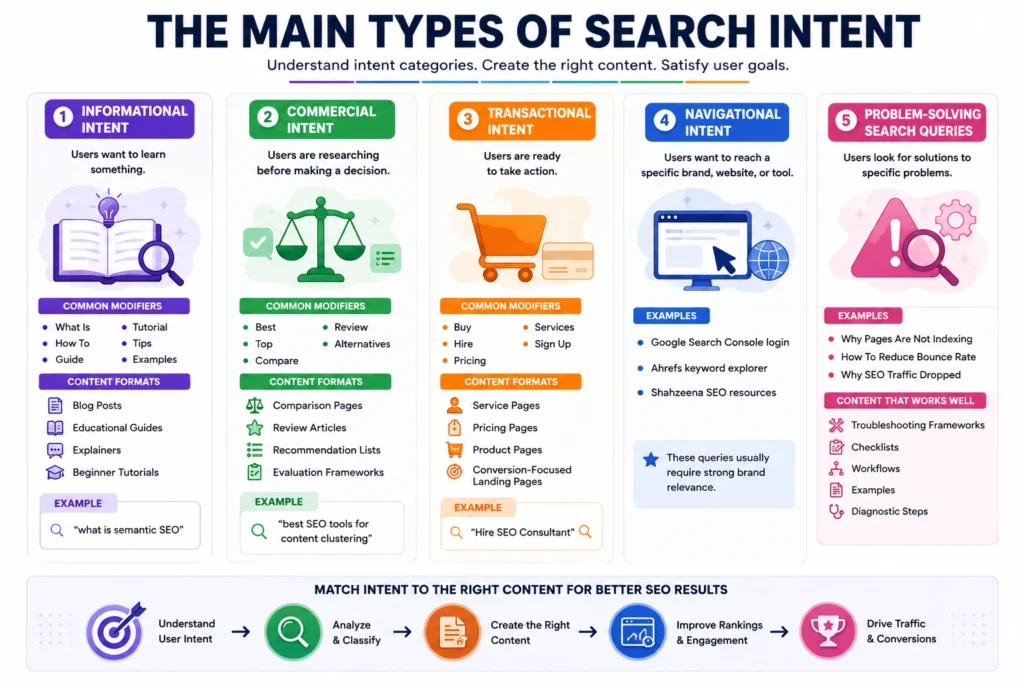
Informational Intent
Users want to learn something.
Common modifiers:
- What Is
- How To
- Guide
- Tutorial
- Tips
- Examples
Typical content formats:
- Blog Posts
- Educational Guides
- Explainers
- Beginner Tutorials
Example:
“what is semantic SEO”
Commercial Intent
Users are researching before making a decision.
Common modifiers:
- Best
- Top
- Compare
- Review
- Alternatives
Typical content formats:
- Comparison Pages
- Review Articles
- Recommendation Lists
- Evaluation Frameworks
Example:
“best SEO tools for content clustering”
Transactional Intent
Users are ready to take action.
Common modifiers:
- Buy
- Hire
- Pricing
- Services
- Sign Up
Typical content formats:
- Service Pages
- Pricing Pages
- Product Pages
- Conversion-Focused Landing Pages
Example:
“Hire Seo Consultant”
Users want to reach a specific brand, website, or tool.
Examples:
- Google Search Console login
- Ahrefs keyword explorer
- Shahzeena SEO resources
These queries usually require strong brand relevance.
Problem-Solving Search Queries
Many modern searches revolve around solving practical issues.
Examples:
- Why Pages Are Not Indexing
- How To Reduce Bounce Rate
- Why Seo Traffic Dropped
These searches often perform well when content includes:
- Troubleshooting Frameworks
- Checklists
- Workflows
- Examples
- Diagnostic Steps
How to Map Search Intent to Content Types
Intent mapping becomes more effective when connected to the correct page structure.
Blog Posts
Best for:
- Informational Queries
- Educational Intent
- Early-Stage Awareness
Strong blog content often includes:
- Definitions
- Examples
- Frameworks
- Faqs
- Visuals
Landing Pages
Best for:
- Commercial Intent
- Service Evaluation
- Lead Generation
Landing pages should focus on:
- Clarity
- Benefits
- Trust Signals
- Conversion Paths
Service Pages
Best for:
- Transactional Intent
- Hiring-Focused Searches
These pages should clearly explain:
- Services
- Process
- Outcomes
- Industry Relevance
Product Pages
Best for:
- Purchase-Focused Intent
- Software Comparisons
- Feature Evaluation
Search engines expect:
- Product Details
- Specifications
- Pricing Clarity
- Use Cases
FAQ Content
Best for:
- Supporting Semantic Relevance
- Capturing Long-Tail Searches
- Addressing Objections
FAQ sections can improve:
- topical depth
- featured snippet opportunities
- content completeness
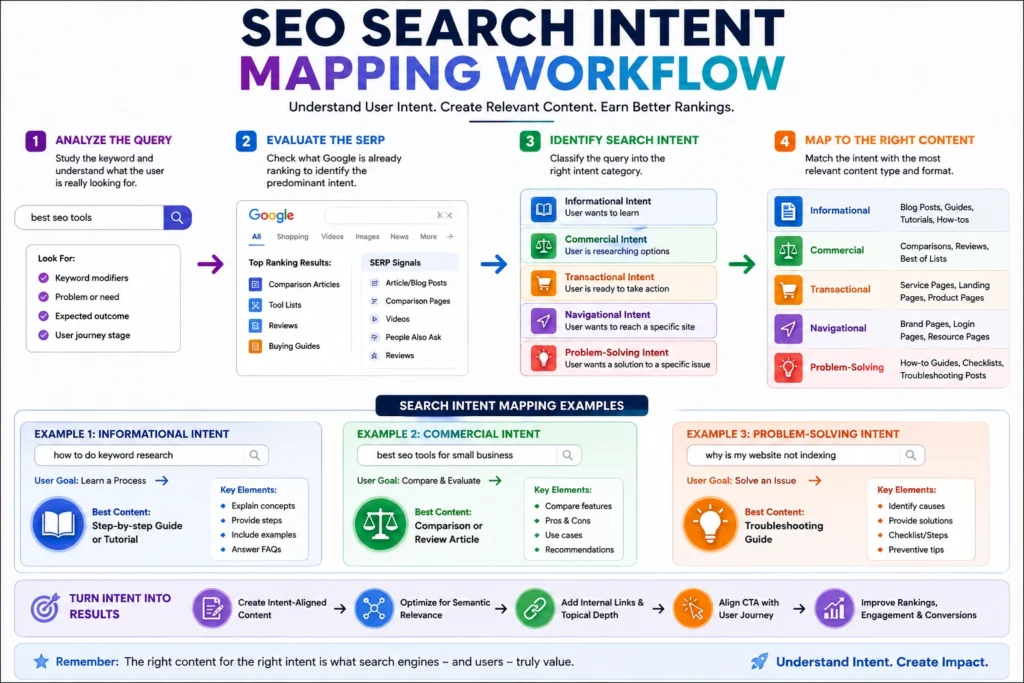
A Practical Search Intent Mapping Framework
SEO teams often struggle because they jump directly into writing without validating intent first.
This framework creates a more reliable workflow.
Step 1: Analyze the Query
Look for:
- Modifiers
- Urgency
- Problem Signals
- Comparison Wording
- Action Wording
Examples:
- “How To” = Informational
- “Best” = Commercial
- “Hire” = Transactional
Step 2: Study the SERP
Analyze:
- Page Formats
- Featured Snippets
- People Also Ask Results
- Video Presence
- Forums
- Comparison Pages
The SERP often reveals Google’s preferred intent interpretation.
Step 3: Identify Content Expectations
Ask:
- Does The User Want Quick Answers?
- Do They Need Deep Guidance?
- Are They Evaluating Options?
- Are They Ready To Convert?
Intent influences:
- Content Depth
- Tone
- Structure
- Cta Positioning
Step 4: Match Intent to Content Depth
Not every keyword needs a 4,000-word guide.
Some searches require:
- Concise Explanations
- Templates
- Comparison Tables
- Troubleshooting Flows
Content should match user expectations instead of forcing unnecessary length.
Step 5: Align CTA With Intent
A mismatch between intent and CTA often reduces engagement.
Examples:
- Informational Pages → Educational Resources
- Commercial Pages → Comparisons Or Case Studies
- Transactional Pages → Consultations Or Service Inquiries
For a deeper planning workflow, review the SEO playbook.
Common Search Intent Mistakes That Hurt Rankings
Targeting Multiple Intent Types on One Page
Trying to rank a single page for:
- Tutorials
- Product Sales
- Comparisons
- Definitions
can dilute relevance.
Ignoring SERP Signals
If Google ranks:
- Videos
- Tools
- Comparison Pages
for a query, publishing a completely different format may struggle.
Over-Optimizing Keywords
Keyword repetition without intent alignment weakens usability.
Modern SEO relies more on relevance and topical satisfaction.
Using Aggressive CTAs Too Early
Informational users are often not ready for direct sales messaging.
Content should guide users progressively.
How Semantic SEO Supports Search Intent Mapping
Semantic SEO helps search engines understand relationships between topics.
Instead of focusing only on one phrase, semantic optimization covers:
- Related Concepts
- Entities
- Supporting Questions
- Contextual Vocabulary
For example, a page about search intent may naturally include:
- Serps
- Keyword Clustering
- Content Strategy
- Topical Authority
- Search Behavior
- Conversion Funnels
This creates stronger topical coverage and improves contextual relevance.
You can also explore additional frameworks inside the SEO resources hub.
Examples of Search Intent Mapping
Example 1: Informational Query
Keyword:
“what is topical authority”
Best format:
- Educational Guide
- Diagrams
- Examples
- Beginner Explanations
Example 2: Commercial Query
Keyword:
“best SEO audit tools”
Best format:
- Comparison Article
- Pros And Cons
- Feature Breakdown
- Use-Case Analysis
Example 3: Problem-Solving Query
Keyword:
“why pages are not indexing”
Best format:
- Troubleshooting Guide
- Diagnostic Checklist
- Step-By-Step Fixes
- Common Causes
How to Turn Intent Research Into a Content Strategy
Intent mapping becomes far more powerful when integrated into long-term content planning.
A strong strategy usually includes:
- Topic Clusters
- Intent Categorization
- Semantic Relationships
- Internal Linking
- Conversion Pathways
Instead of publishing random articles, businesses can build structured content ecosystems around user needs.
For businesses building eCommerce-focused search strategies, this guide may help.
If you are evaluating professional SEO support, this resource explains how to choose an SEO expert.
FAQs
Search intent refers to the reason behind a user’s search query. It explains what the user expects to find after performing a search.
Search engines prioritize pages that best satisfy user expectations. Matching content to intent improves relevance and engagement signals.
The main types include informational, commercial, transactional, navigational, and problem-solving intent.
You can identify intent by analyzing keyword modifiers, SERP results, content formats, and user goals.
In some cases, partially overlapping intents can work together, but conflicting intents often reduce clarity and ranking potential.
Search intent mapping is the process of matching keywords with the correct content type and user journey stage.
Final Thoughts
Search intent mapping helps transform SEO from keyword targeting into user-focused content strategy.
The strongest pages today are not simply optimized for phrases. They are optimized for outcomes.
When content aligns with:
- User Expectations
- Semantic Relevance
- Serp Behavior
- Contextual Depth
it becomes easier to improve visibility, engagement, and conversion potential simultaneously.
Modern SEO works best when content genuinely helps users move closer to their goals.


